Source: Read the original article, The Ophthalmologist, 2 Sep 2026. Summary written by Future Health GCC.
What happened
Researchers at Moorfields Eye Hospital and the UCL Institute of Ophthalmology in London have tested a new stem cell treatment in people for the first time. The results were published in JAMA Ophthalmology in July 2026.
The condition
Aniridia-related keratopathy (ARK) is a rare inherited condition that affects roughly one in 40,000 to 100,000 people. It causes a shortage of limbal stem cells, which normally keep the clear front surface of the eye healthy. Without them, tissue gradually grows over the cornea, clouding it and reducing sight. Until now there has been no effective treatment.
What they did and found
The team grew two kinds of stem cells, limbal epithelial stem cells and stromal stem cells, on a thin collagen scaffold and transplanted it onto the eye. Nine patients each had one eye treated, and their other eye served as a comparison.
After 12 months, vision in the treated eyes had improved by an average of 24 letters, almost five lines on a standard eye chart. The health of the eye’s surface also improved compared with the untreated eyes.
How far along it is
This was a small, first-in-human study. The researchers are planning a larger clinical trial, with the aim of the treatment one day being offered through the NHS.
What it means for families
It shows how carefully grown stem cells may help restore tissue that the body cannot repair on its own. The treatment is still experimental and is not yet available outside research.
Read the original article on The Ophthalmologist →
This is a summary of published research, written by Future Health GCC. It is not medical advice. Speak to your doctor about any treatment.
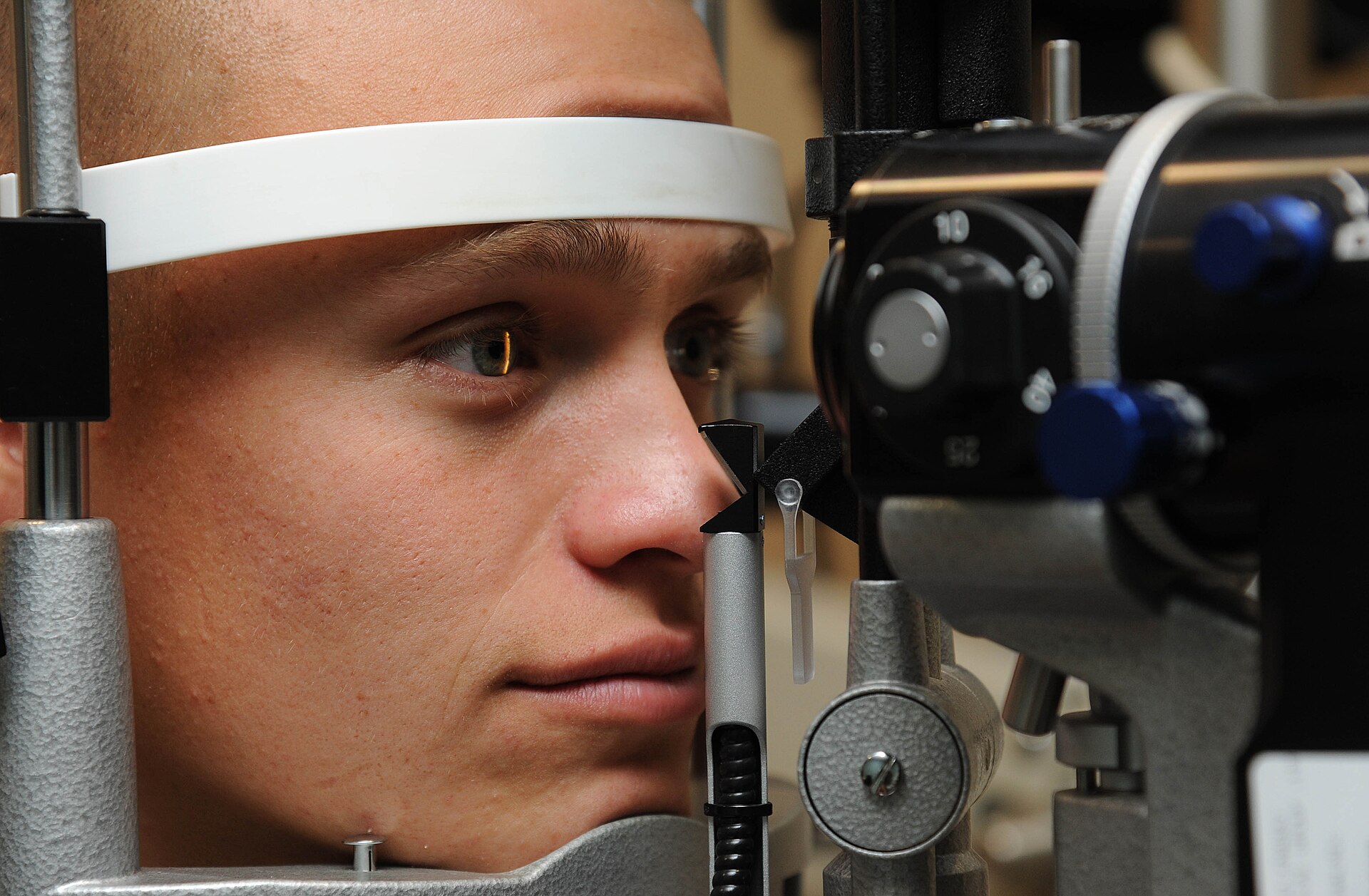
Photo: U.S. Air Force / SSgt Darlene Seltmann, via Wikimedia Commons (public domain).